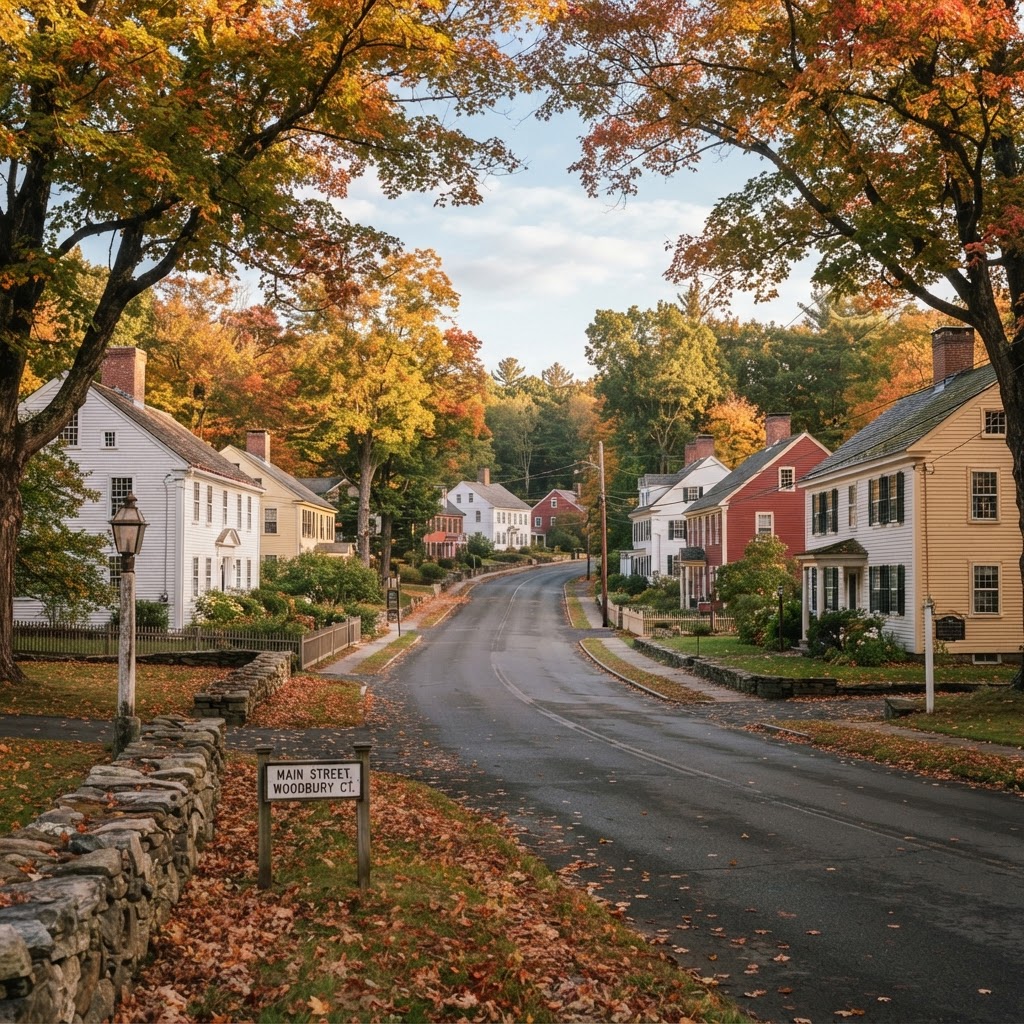
Woodbury, Connecticut
Historic Main Street, quiet roads, old houses, and enough open country to make everyday life feel a little farther removed than it really is.
Woodbury sits in an interesting middle ground: recognizably rural without feeling remote, historically rooted without becoming a museum, and centered enough that country living does not require giving up the idea of a town altogether.
Explore Woodbury ↓Woodbury reveals itself slowly.
Woodbury feels less like a collection of subdivisions and more like a landscape people happen to live within.
There are Connecticut towns that announce themselves immediately. Woodbury is quieter about it. Main Street stretches rather than gathers into a dense downtown. Old houses appear between churches, businesses, restaurants, stone walls, lawns, and long-established trees. Leave that central corridor and the town begins opening into winding roads, wooded parcels, fields, and homes that feel increasingly embedded in the landscape.
That relationship between center and countryside is one of Woodbury’s defining characteristics. There is enough commercial life to make the town useful day to day, but much of its residential identity still comes from land, separation, mature surroundings, and homes accumulated over generations rather than built all at once.
The historic character is tangible rather than thematic. Woodbury’s two local historic districts encompass portions of Main Street and related streets, and the town contains examples of architecture spanning from the 17th through the 20th centuries.
The result is a place that can feel distinctly Connecticut without requiring you to choose between a recognizable town and a quieter property beyond it.
Woodbury, in context.
A quick orientation before we look more closely.
U.S. Census Bureau July 1, 2025 estimate.
Approximate municipal area.
Market information updated August 2026.
What draws people here.
ROOM TO BREATHE
Woodbury offers a residential pattern where larger lots, wooded settings, long driveways, older roads, and open land remain part of the normal visual language of the town.
A TOWN THAT STILL HAS A CENTER
Country living does not mean abandoning everyday convenience. Main Street remains Woodbury’s defining spine, combining civic uses, homes, restaurants, businesses, shops, and historic architecture rather than separating daily life into a distant commercial zone.
ARCHITECTURAL DEPTH
Woodbury’s housing stock is not visually uniform. Colonial-era architecture, Greek Revival houses, Victorian-era additions, 20th-century homes, later suburban development, condominiums, and contemporary properties coexist within the same town.
LANDSCAPE AS PART OF DAILY LIFE
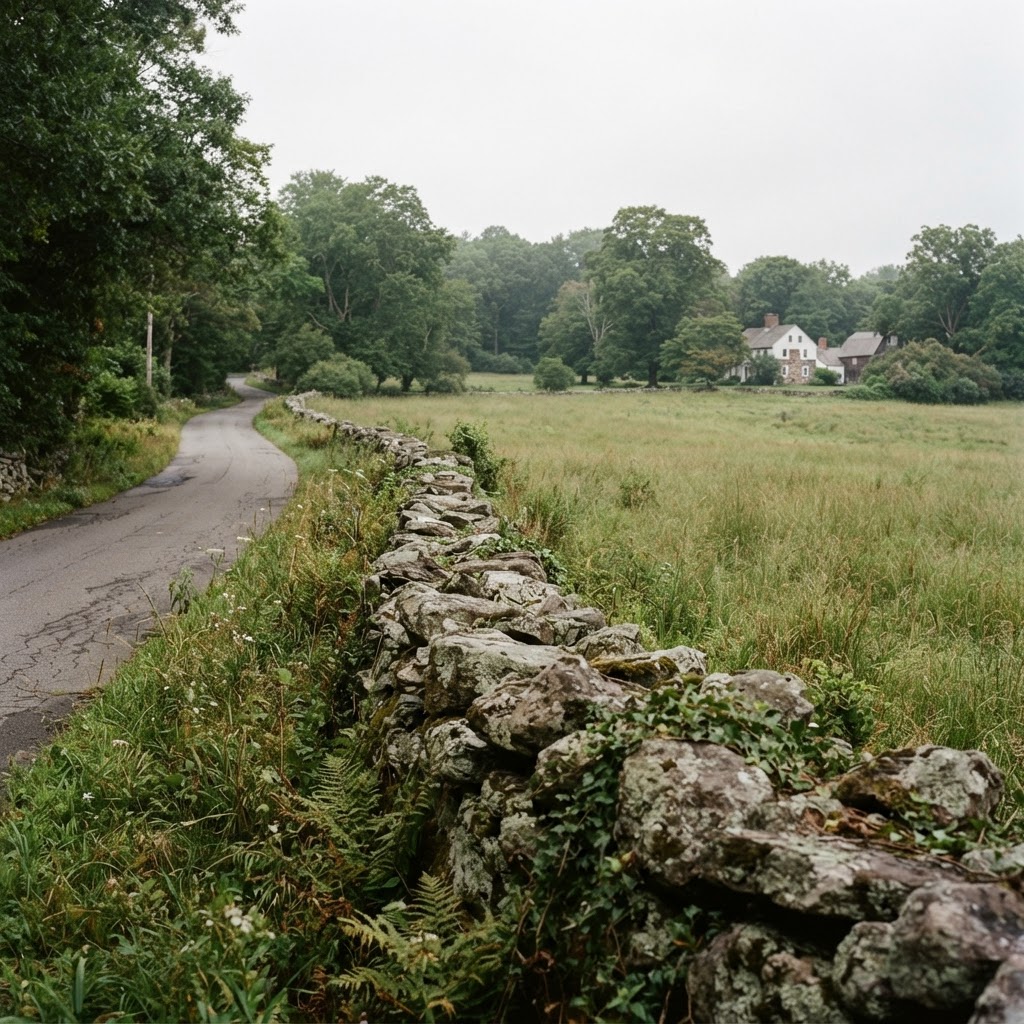
Wooded hills, open parcels, stone walls, wetlands, fields, and long-established roads create a sense that the natural landscape still participates in how the town is experienced.
USEFUL WITHOUT FEELING OVERBUILT
Woodbury supports everyday businesses and services while preserving a residential and historic identity that remains visible along its major corridors.
A DISTINCTLY CONNECTICUT SENSE OF PLACE
Woodbury makes sense for someone who wants the old-house, stone-wall, country-road version of Connecticut without moving entirely outside the orbit of regional employment, shopping, services, and larger neighboring towns.
Life here happens somewhere between Main Street and the road home.
Woodbury does not organize daily life around a single compact downtown. Instead, Main Street stretches through the town as a long civic, commercial, residential, and historic corridor. A coffee stop, school run, restaurant, antique shop, grocery trip, or appointment may all happen along the same road that passes centuries-old houses and churches.
Move away from that corridor and Woodbury changes quickly. Roads become quieter. Properties become more separated. Woods and land begin to dominate the view. A five-minute drive can move the experience from a recognizable village setting into something decidedly more rural.
Weekends naturally lend themselves to staying local or moving easily into the surrounding region. Outdoor recreation and preserved land are part of the area’s identity, while nearby Southbury and Waterbury broaden the range of larger-format shopping and services.
The seasonal shift matters here. Summer softens the roads beneath dense tree canopy. Autumn makes the landscape itself the event. Winter exposes the architecture and stone walls. Spring returns the town gradually rather than all at once.
Woodbury’s appeal is not that everything is within walking distance. It is that everyday life can remain convenient without making the landscape disappear.
The landscape is part of the address.
Woodbury covers roughly 36 square miles, giving the town enough geographic breadth for individual areas to feel meaningfully different from one another.
Some properties feel connected to Main Street and established neighborhoods. Others sit along winding roads with woods, slopes, fields, larger parcels, or substantial separation from neighboring homes. The experience of owning in Woodbury can therefore change considerably according to the property itself.
Connecticut Lifestyle & Homes Place Profile
Connecticut Lifestyle & Homes editorial place profile — qualitative, not a statistical rating.
Main Street is unusually long. That is part of the point.
Woodbury’s center is experienced as a corridor rather than a compact cluster. Historic houses, civic buildings, churches, shops, restaurants, professional services, and commercial areas unfold along Main Street rather than resolving into a conventional downtown square.
That elongated form helps explain why Woodbury can simultaneously feel town-centered and rural. Main Street provides continuity; the roads branching away from it provide space.
A FEW PLACES WORTH KNOWING
A local cafe or bakery
LOCAL FOOD / COFFEE
A morning stop along the Main Street corridor.
View →A nearby trail or preserve
LAND / OUTDOORS
Access to wooded landscape and seasonal recreation.
View →A historic site or landmark
CULTURE / HISTORY
Part of Woodbury’s centuries of recorded history.
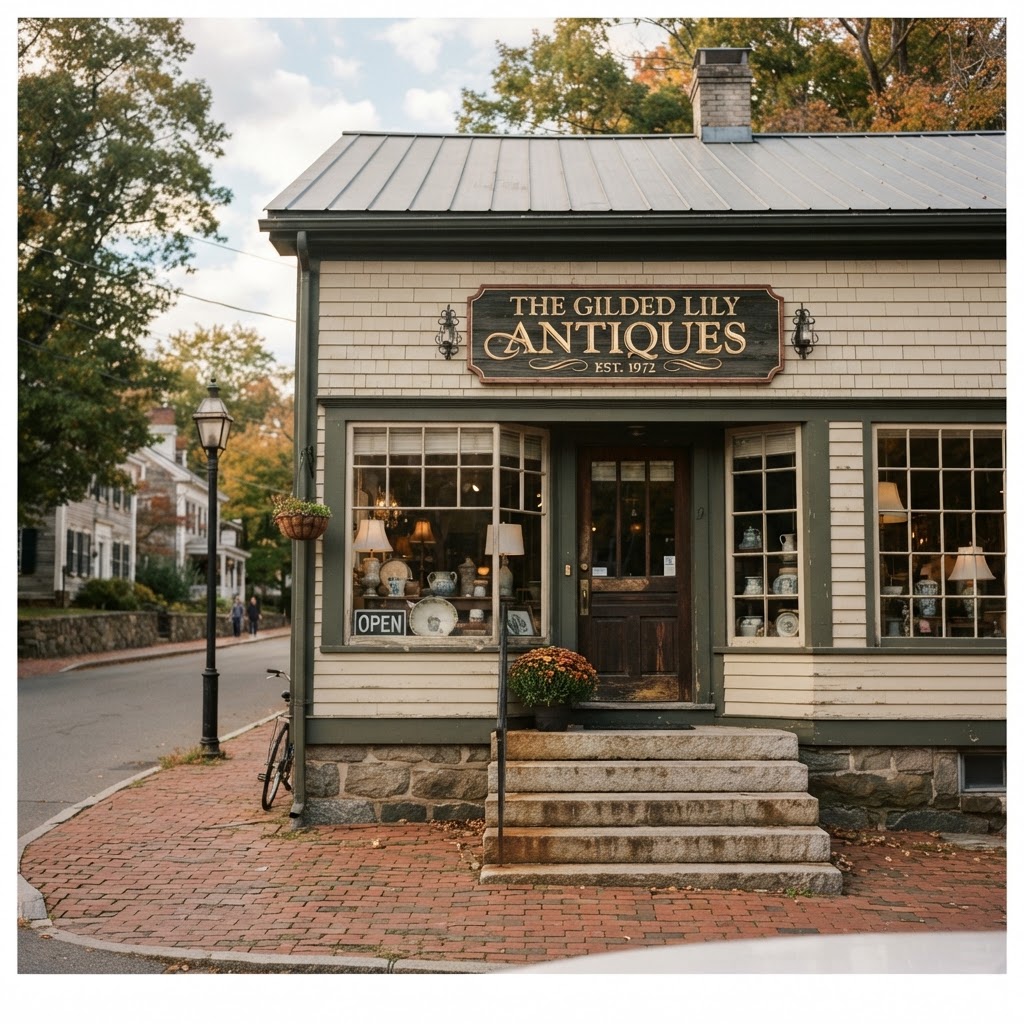
View →An antique shop or local business
LOCAL SHOP / ANTIQUES
Part of Woodbury’s longstanding antiques tradition.
View →The housing is as layered as the town itself.
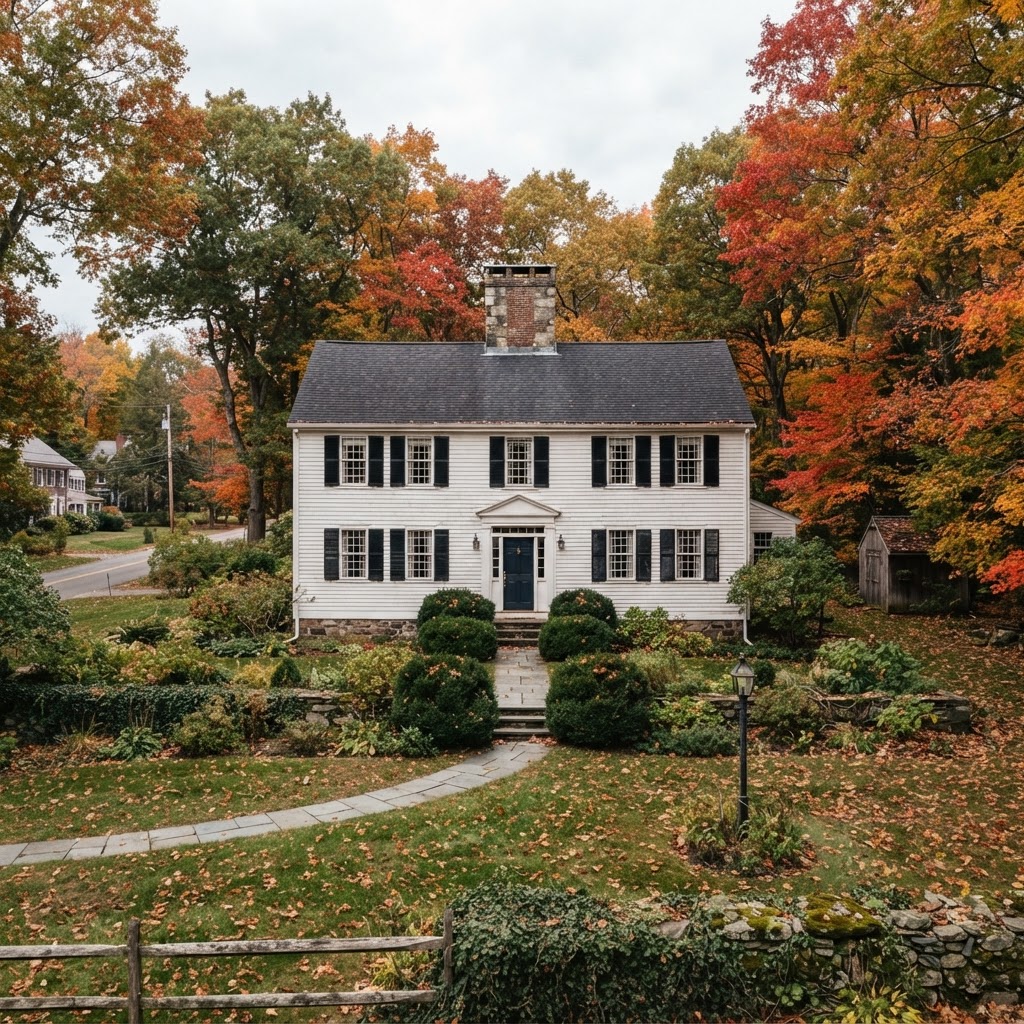
Woodbury did not emerge from one major development era, and its housing reflects that. Historic properties along and around Main Street sit alongside later Colonials, Capes, ranches, contemporary homes, condominiums, larger country properties, and homes built gradually on roads extending through the town.
That variety creates an important distinction for buyers: there is no single “Woodbury house.” Two properties at similar prices may offer entirely different combinations of age, acreage, condition, privacy, architecture, and access to the center.
ANTIQUE + HISTORIC
DISTINCTIVEWoodbury contains genuinely old housing rather than contemporary imitations of historic style, particularly around its historic corridors.
COLONIAL + TRADITIONAL
COMMONLater Colonial and traditional New England forms are a recurring part of the town’s established residential landscape.
RANCH + CAPE
COMMONMid-century and postwar housing adds smaller-scale and often more approachable alternatives to older or larger properties.
CONTEMPORARY
OCCASIONALWooded sites and larger parcels create opportunities for houses that relate more directly to landscape and privacy.
COUNTRY PROPERTY / ESTATE
DISTINCTIVEAt higher price points, Woodbury can offer combinations of acreage, architecture, outbuildings, privacy, and setting that become difficult to reproduce in denser Connecticut markets.
CONDOMINIUM
AVAILABLECondominium ownership provides a lower-maintenance alternative within a town otherwise strongly associated with detached homes and land.
What different price points may encounter.
ENTRY RANGE
More likely to encounter smaller homes, condominiums, properties requiring updating, or less acreage.
CORE MARKET
A broader mix of established detached homes with meaningful variation in condition, setting, age, and lot size.
UPPER MARKET
Larger homes, more substantial land, stronger privacy, renovation quality, or more distinctive architecture become more common.
DISTINCTIVE / LUXURY
Acreage, estate-like settings, exceptional renovation, historic significance, outbuildings, or unusual property characteristics begin to drive value more heavily.
Based on recent Woodbury market activity. Inventory changes continuously.
Woodbury housing, right now.
WHAT THE NUMBERS MEAN
Woodbury's market reflects its character: limited inventory, distinctive properties, and buyers who are often looking for something specific rather than interchangeable. The 42 active listings as of mid-2026 represent a constrained market where well-positioned homes in good condition tend to attract serious attention. Pricing in Woodbury depends heavily on the individual property — acreage, age, condition, architecture, and setting can drive meaningful differences between comparable listings. Buyers should expect patience to be part of the process, and sellers should expect that positioning matters more than aggressive pricing in a market where inventory is distinct rather than uniform.
The property is only part of what you are buying.
Woodbury’s country character means ownership can involve considerations that may be unfamiliar to someone arriving from a denser suburb, condominium, or city environment. The relevant issues depend entirely on the specific property, but several deserve to be understood early.
WELL WATER
Private wells are common in lower-density Connecticut housing and should be understood as a home system with its own testing, maintenance, and equipment considerations.
SEPTIC SYSTEMS
Many country properties depend on individual septic systems rather than municipal sewer infrastructure. Age, condition, design, use, maintenance history, and site characteristics all matter.
OIL + PROPANE
Older and more rural Connecticut housing frequently uses fuel sources other than natural gas. The heating system belongs in the ownership-cost conversation, not merely the inspection report.
OLDER HOME SYSTEMS
Woodbury’s architectural depth means some properties may combine old construction with decades of later updates. Electrical, plumbing, insulation, windows, foundations, chimneys, heating, and previous renovation work deserve property-specific understanding.
LAND + DRAINAGE
A larger parcel can be one of Woodbury’s strongest lifestyle advantages while also introducing additional landscaping, drainage, tree, driveway, snow, and site-maintenance responsibilities.
HISTORIC-DISTRICT CONTEXT
Properties inside Woodbury’s locally designated historic districts may be subject to review requirements for certain exterior changes. The town’s Historic District Commission administers those local protections.
Understand the tax burden in relation to the property.
Illustrative estimate based on current assessment and mill-rate information. Verify property-specific tax information with the Town of Woodbury.
Understand Connecticut Property Taxes →Regional School District 14
Woodbury and Bethlehem share Regional School District 14. Woodbury is home to Mitchell Elementary School, Woodbury Middle School, and Nonnewaug High School; Bethlehem Elementary serves the neighboring town.
Explore Region 14 Information →Country living without disappearing from the map.
Woodbury is a driving-oriented town. Its appeal is not direct rail access or dense regional transit; it is the ability to live in a quieter landscape while remaining connected by road to larger employment, shopping, service, and transportation centers.
Typical Drive Times
Woodbury may make sense if...
You want land to feel like part of home.
You would rather see trees, field, yard, or distance from the window than maximize proximity to everything else.
You want country character without complete isolation.
A recognizable Main Street and useful local businesses matter, even if you expect to drive for most daily needs.
You prefer established housing to master-planned uniformity.
Architectural variety, older properties, mature landscapes, and homes from different eras feel more appealing than consistency.
You appreciate a town that looks unmistakably New England.
Historic architecture, long roads, churches, stone walls, mature vegetation, and older residential patterns are part of what you are seeking.
You can trade rail convenience for space.
Your commute or work pattern allows you to prioritize land, privacy, and atmosphere over immediate train access.
You want a home that participates in the landscape.
The property itself — acreage, trees, views, privacy, outdoor space — may matter nearly as much as the house.
Woodbury deserves a more careful second look if...
You require daily direct rail access.
Woodbury is fundamentally a driving-oriented town.
Dense walkability is essential.
Main Street provides a center, but Woodbury does not function like a compact pedestrian downtown.
You strongly prefer municipal utilities.
Property-specific water, septic, and heating systems can be part of ownership.
You want predominantly new housing.
Woodbury’s appeal is heavily connected to established housing and a landscape shaped over time.
Every place comes with tradeoffs.
SPACE ↔ CONVENIENCE
More land and separation often mean more driving and more property to maintain.
CHARACTER ↔ AGE
Architectural depth can come with older systems, previous renovations, and additional due diligence.
QUIET ↔ COMMUTE
Woodbury’s quieter setting exists partly because it is removed from the state’s major rail corridors and densest employment centers.
LAND ↔ RESPONSIBILITY
Acreage, trees, wells, septic, long driveways, drainage, and outdoor infrastructure can become part of the ownership experience.
SCARCITY ↔ CHOICE
Distinctive homes and settings are appealing partly because they are not interchangeable; buyers may need patience when looking for a very specific combination of house, land, location, and condition.
The question is not whether Woodbury has tradeoffs. It is whether they are the tradeoffs you want.
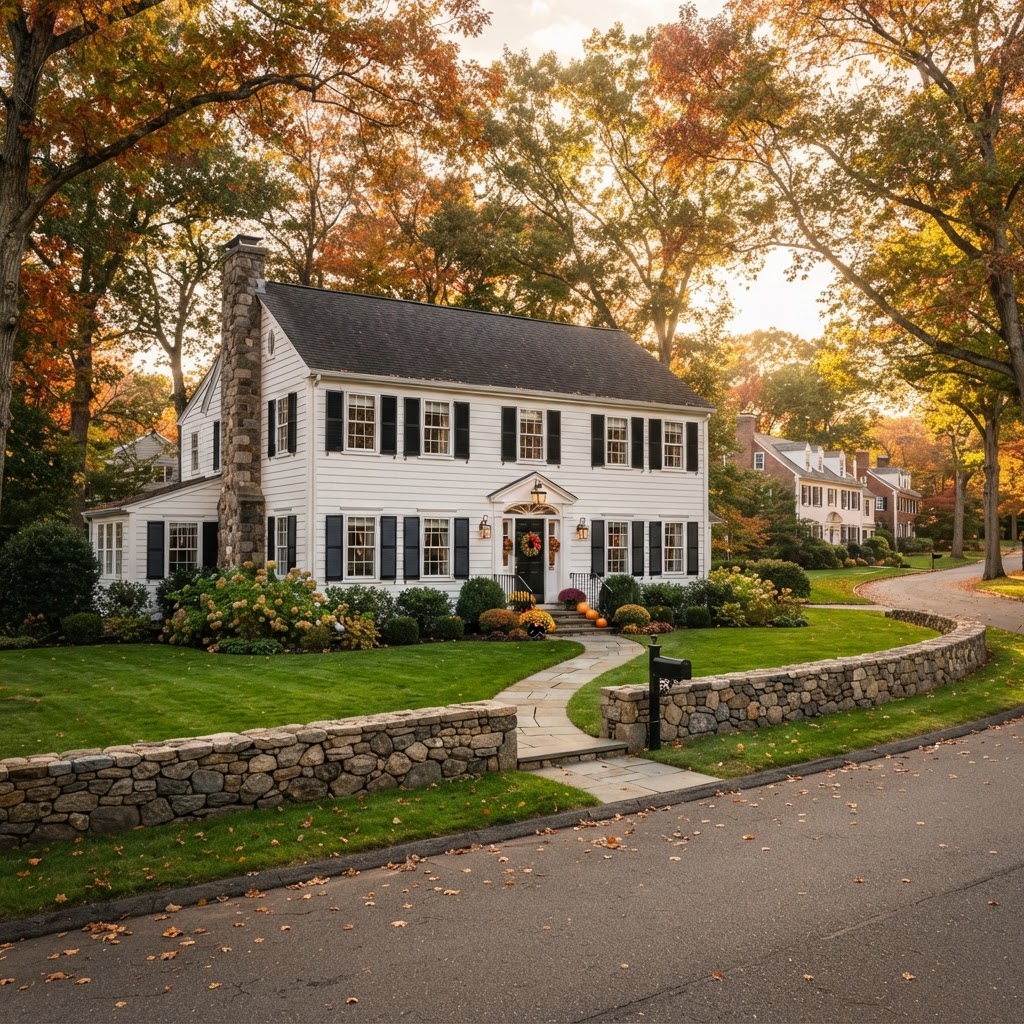
Woodbury, in pictures.

A few useful next reads.
BUYING
Buying a Home in Connecticut
The complete guide to understanding the buying process in Connecticut.
Read the Guide →HOME VALUE
Connecticut Home Value
Understand what your home is worth and how to think about value.
Read the Guide →RELOCATION
Moving to Connecticut
A guide for anyone considering a move to Connecticut.
Read the Guide →If Woodbury feels close, keep looking.
Roxbury
Quieter, smaller, and more strongly oriented toward land and privacy, with less everyday commercial infrastructure than Woodbury.
Southbury
More suburban and regionally connected, with greater concentration of shopping, services, and access to I-84 while still offering substantial residential space.
Bethlehem
Smaller and more rural, sharing Woodbury’s school district while offering an even quieter residential pattern.
Find Connecticut by the way you want to live.
COUNTRY LIVING
Space, landscape, privacy, and quieter roads.
CONNECTED TOWNS
Regional access without giving up a recognizable community.
COASTAL CONNECTICUT
Shoreline, water, village life, and Long Island Sound.
TOWN-CENTERED LIVING
A stronger relationship between home and the everyday life around the center.
Seeing the town is different from understanding whether it fits your move.
If Woodbury is beginning to feel like a possibility, the next useful step is to put the town, the homes available within it, your budget, your priorities, and the alternatives around it into the same context.