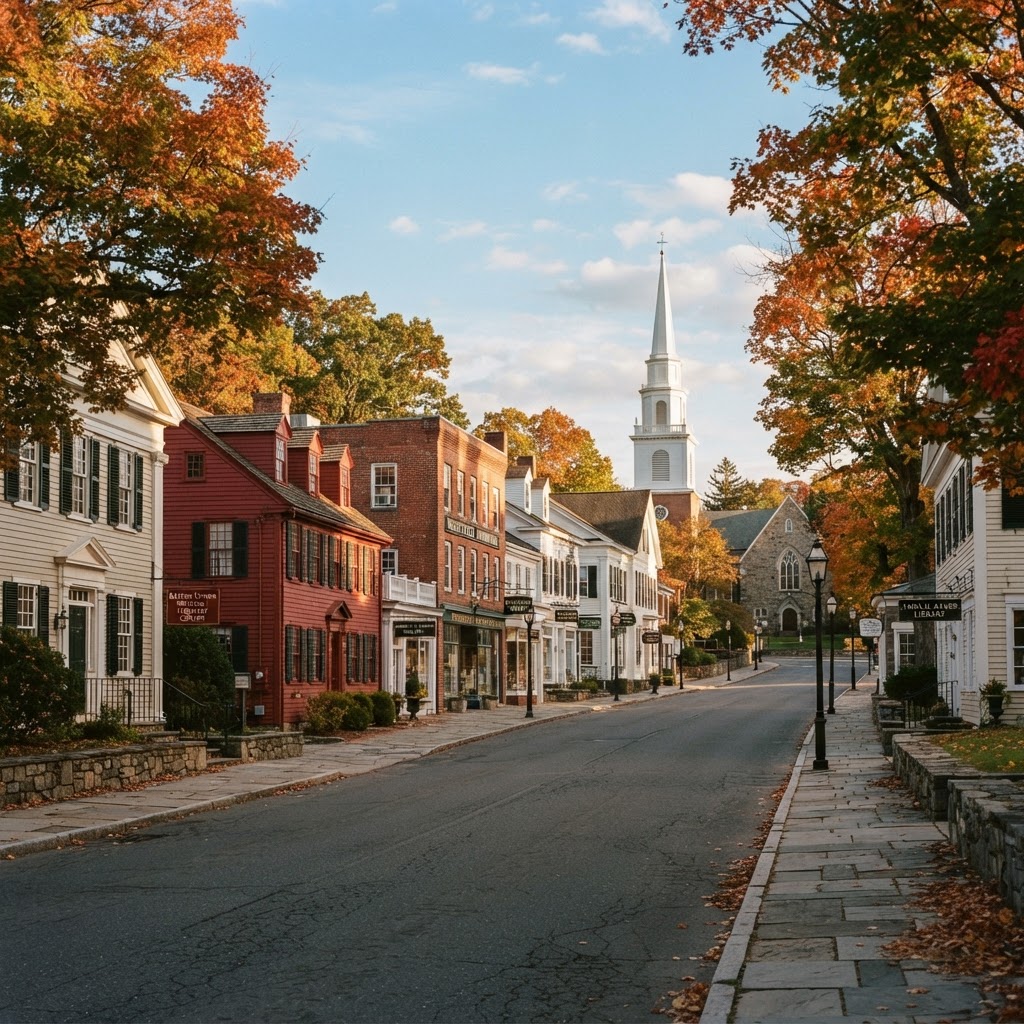
Ridgefield, Connecticut
Historic Main Street, country roads, cultural depth, and enough connection to keep the wider region within reach.
Ridgefield sits in a distinctive part of Fairfield County: close enough to New York and lower Fairfield County to remain regionally connected, yet far enough inland that the town still feels shaped by wooded roads, established neighborhoods, older architecture, and a remarkably intact center.
Explore Ridgefield ↓Ridgefield feels unusually complete.
Ridgefield feels connected without feeling consumed by what it is connected to.
Many towns force a choice between a real center and a quieter residential setting. Ridgefield manages to hold both. Main Street has enough architectural continuity and civic presence to feel like a place rather than a commercial strip, while the roads beyond it quickly become more residential, wooded, and private.
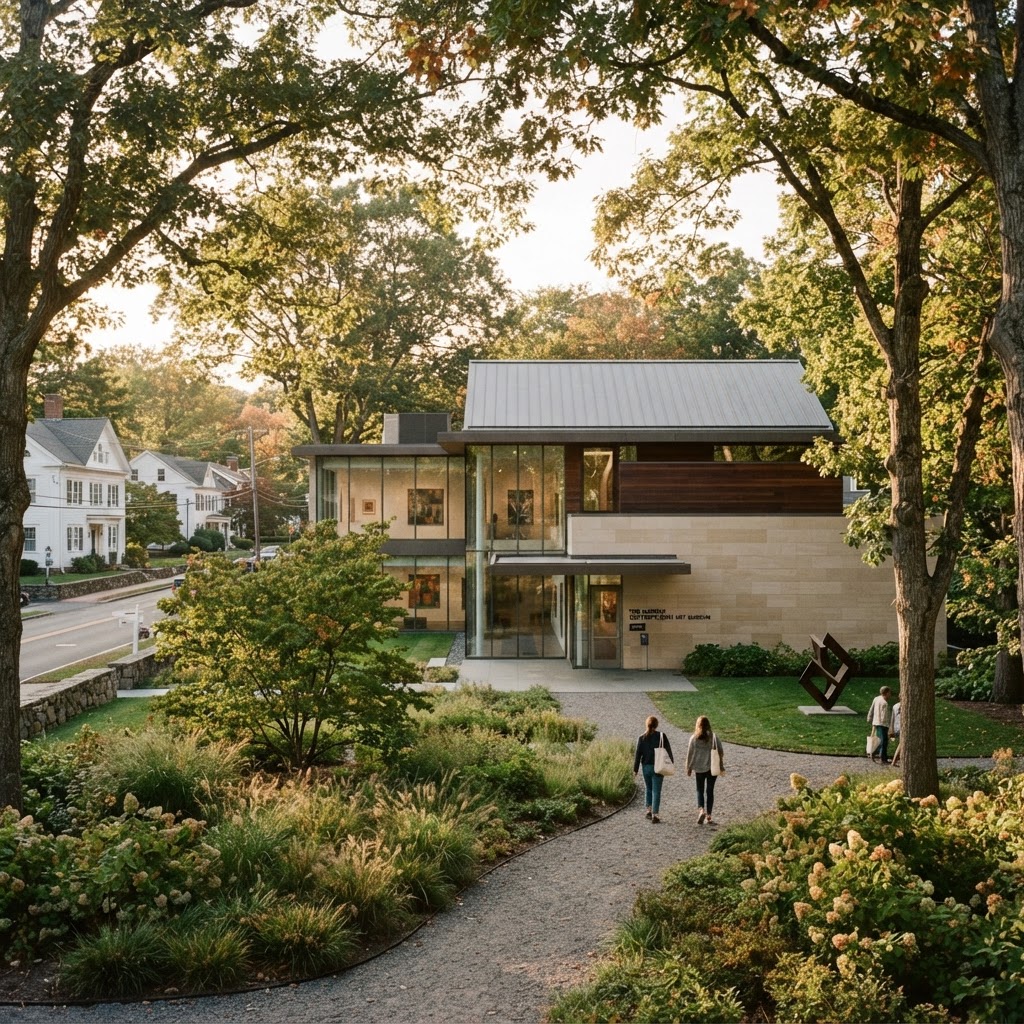
The center has visible cultural weight. Museums, theaters, historic sites, restaurants, shops, public spaces, and long-established homes are part of the same everyday geography rather than destinations separated from ordinary life. The Aldrich Contemporary Art Museum, Weir Farm National Historic Site, Keeler Tavern, Ridgefield Playhouse, ACT of Connecticut, and Prospector Theater are all part of the town’s cultural fabric.
That depth changes the feeling of the town. Ridgefield does not rely only on proximity to New York or the quality of its housing to explain its appeal. It has enough life of its own that the town itself can become part of the reason to live there.
Ridgefield, in context.
A quick orientation before we look more closely.
U.S. Census Bureau July 1, 2025 estimate.
Census Bureau 2020–2024 ACS estimate.
Census Bureau 2020–2024 ACS estimate for workers age 16+.
Town of Ridgefield FY 2026–27.
Market information updated August 2026.
What draws people here.
A MAIN STREET THAT STILL MATTERS
Ridgefield’s center is not simply functional. Main Street is part of the identity of the town, combining homes, shops, civic buildings, museums, churches, public spaces, and cultural institutions along a historic spine that has defined Ridgefield since its founding in 1708.
CONNECTIVITY WITHOUT DENSITY
Ridgefield works for people who want regional access without choosing one of Connecticut’s denser commuter environments. The town is roughly an hour’s drive north of New York City, with road access to Westchester, lower Fairfield County, Danbury, and nearby Metro-North stations.
CULTURE AS PART OF ORDINARY LIFE
Ridgefield has an unusually rich collection of museums, performance venues, historic destinations, and cultural organizations for a town of its size — the Aldrich, Weir Farm, Keeler Tavern, Ridgefield Playhouse, ACT of Connecticut, and Prospector Theater among them.
ESTABLISHED HOMES + MATURE LANDSCAPE
Ridgefield’s residential environment feels accumulated rather than newly assembled. Mature trees, older roads, traditional architecture, established neighborhoods, and larger properties give much of the town a settled quality shaped over more than three centuries.
OUTDOOR ACCESS WITHOUT LEAVING TOWN
Trails, lakes, parks, golf, country roads, and surrounding natural areas give Ridgefield a meaningful outdoor dimension alongside its cultural and commercial life.
A STRONGER SENSE OF PLACE THAN MANY COMMUTER TOWNS
Ridgefield can work for someone who wants access to the metropolitan economy but does not want the town itself to feel purely transactional or commuter-defined.
Ridgefield gives you reasons to stay in town.
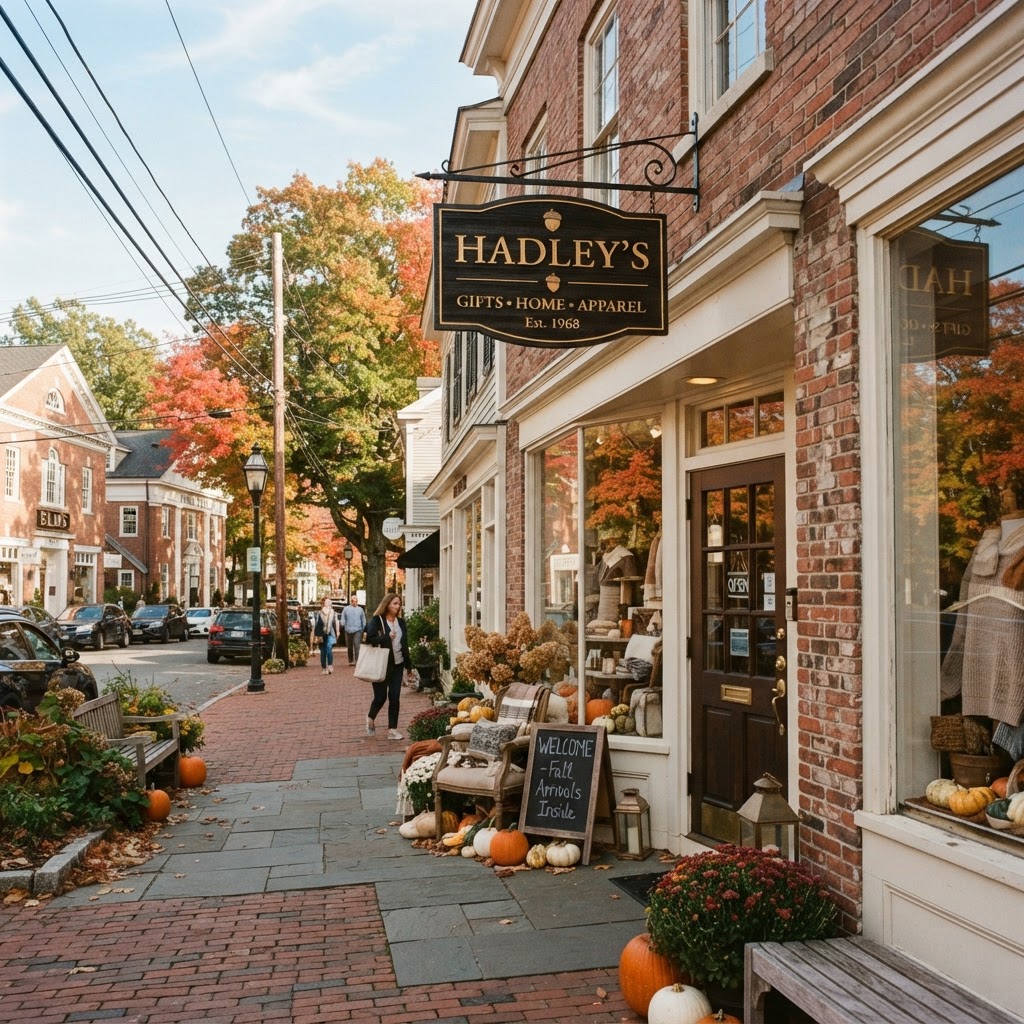
An ordinary week can revolve around Main Street more naturally here than in many spread-out Fairfield County communities. Coffee, errands, dinner, a performance, a museum visit, the library, a walk through town, or a movie can all exist within the same local ecosystem.
That cultural and commercial concentration is one of Ridgefield’s advantages. Boutiques, restaurants, theaters, museums, historic attractions, trails, lakes, and country roads mean the town itself supports both everyday use and weekend activity.
Beyond the center, the rhythm changes. Residential roads become quieter, properties become more private, and the landscape begins carrying more of the experience. That transition between center and edge is important: Ridgefield is town-centered without being densely urban, and connected without becoming visually metropolitan.
In Ridgefield, the town center is not something you merely drive through on the way somewhere else.
The town sits closer to the city than it feels.
Ridgefield’s landscape remains one of the reasons its metropolitan proximity does not dominate the experience. The town describes itself as being in the foothills of the Berkshire Mountains, and its public materials emphasize country roads, lakes, parks, trails, and golf alongside Main Street and cultural destinations.
The residential experience varies considerably from central streets to larger properties farther from town. Some buyers may prioritize proximity to Main Street; others may choose more acreage, privacy, or wooded surroundings.
Connecticut Lifestyle & Homes Place Profile
Connecticut Lifestyle & Homes editorial place profile — qualitative, not a statistical rating.
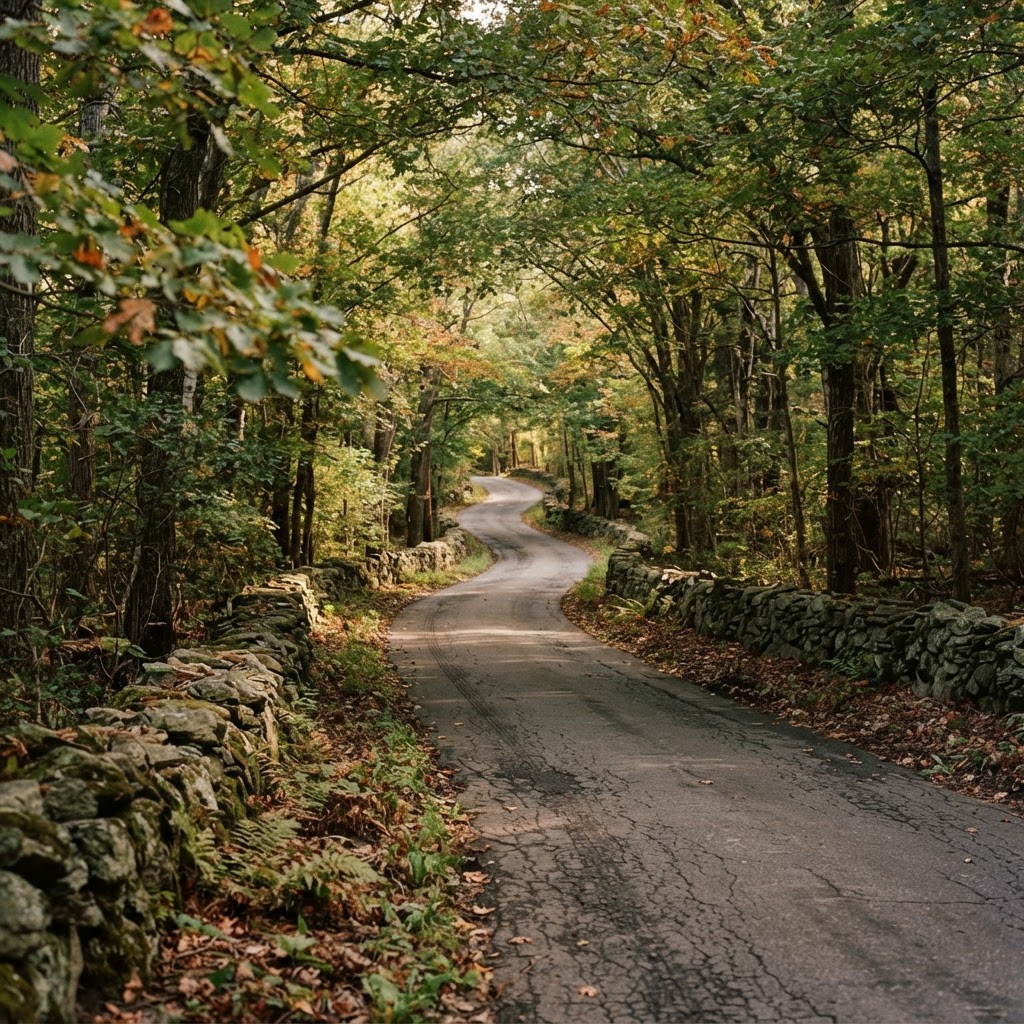
Main Street gives Ridgefield a center of gravity.
Ridgefield’s town center is unusually legible. Main Street is a historic axis rather than an isolated commercial development, and the surrounding cultural institutions reinforce that identity.
The Aldrich Contemporary Art Museum, Keeler Tavern, Ridgefield Playhouse, ACT of Connecticut, Prospector Theater, boutiques, restaurants, and civic spaces create a town where cultural life is unusually concentrated for suburban Connecticut.
A FEW PLACES WORTH KNOWING
The Aldrich Contemporary Art Museum
ART + CULTURE
A nationally recognized contemporary art museum on Main Street.
View →Ridgefield Playhouse
PERFORMANCE
Films, concerts, and live performance in a restored historic venue.
View →Keeler Tavern Museum
HISTORY
A historic site preserving centuries of Ridgefield’s civic and domestic history.
View →Weir Farm National Historic Site
ART + CULTURE
A National Park Service site celebrating American Impressionist painting.
View →The housing often reflects the same balance as the town: established, substantial, and varied.
Ridgefield’s residential character is not defined by a single subdivision pattern or one architectural era. The town grew from an early Main Street settlement into a broader residential community over more than three centuries, which helps explain why buyers encounter older homes, traditional Colonials, Capes, ranches, later luxury construction, contemporary properties, and larger estate-like settings within the same municipality.
The defining difference between Ridgefield properties is often not simply size. Proximity to Main Street, land, privacy, renovation quality, road character, architecture, and the relationship between house and setting can substantially change how two homes at similar prices are experienced.
HISTORIC / ANTIQUE
DISTINCTIVEOlder properties around the historic core give Ridgefield architectural depth that newer commuter communities cannot easily reproduce.
COLONIAL / TRADITIONAL
COMMONTraditional detached housing is a major part of Ridgefield’s established residential character.
CAPE + RANCH
AVAILABLESmaller-scale postwar homes provide alternatives to Ridgefield’s larger and higher-priced housing.
CONTEMPORARY
OCCASIONALWooded parcels and irregular terrain can support homes designed more directly around privacy and landscape.
LUXURY / ESTATE
SIGNIFICANTAt higher price points, Ridgefield can offer substantial homes, larger parcels, architectural detail, privacy, and mature settings.
CONDOMINIUM / LOWER-MAINTENANCE
AVAILABLEAttached and condominium options create alternatives to the detached-home ownership profile that dominates much of the town.
What different price points may encounter.
ENTRY RANGE
Smaller detached homes, condominiums, properties requiring improvement, or homes with tradeoffs in size, location, or condition may dominate the lower end of the local market.
CORE MARKET
Established single-family housing becomes broader, with meaningful differences in renovation quality, lot, proximity to Main Street, and overall scale.
UPPER MARKET
Larger homes, stronger renovation, more acreage, privacy, or highly desirable settings become increasingly important drivers of value.
DISTINCTIVE / LUXURY
Architectural significance, exceptional renovation, substantial land, estate-like settings, pools, outbuildings, or unusually strong location can define the top of the market.
Based on current Ridgefield market activity. Inventory changes continuously.
Ridgefield housing, right now.
WHAT THE NUMBERS MEAN
Ridgefield's market reflects its position as an established, amenitized Fairfield County town. Inventory remains relatively tight for a community of this size, with median sale prices well above the Connecticut average. Well-priced homes in good condition near Main Street or on desirable wooded lots tend to move efficiently, while properties with combination tradeoffs — condition, location, or pricing — may take longer. Buyers should expect meaningful variation in value drivers depending on proximity to town, land, privacy, renovation quality, and architectural character.
How the market has moved.
MEDIAN SALE PRICE
CLOSED SALES
DAYS ON MARKET
Trend data will display when historical market records are published.
Established homes and larger properties come with their own context.
Ridgefield contains both denser central areas and lower-density residential properties, which means ownership considerations vary significantly by address. Some properties use municipal infrastructure while others rely on private wells or septic systems, making property-specific due diligence important.
PRIVATE WELL
Some Ridgefield homes use private wells. The town Health Department regulates their construction and recommends that prospective buyers test well water before purchase.
SEPTIC
Some properties rely on private septic systems. Ridgefield’s Health Department reviews, permits, and inspects septic systems under Connecticut public-health requirements.
OLDER-HOME SYSTEMS
Homes from earlier construction eras may combine original structure with decades of later renovations, making electrical, plumbing, roofing, insulation, foundations, chimneys, and mechanical systems relevant parts of due diligence.
LAND + TREES
Larger and wooded lots can provide privacy and beauty while introducing additional tree, drainage, driveway, snow, landscape, and exterior-maintenance responsibilities.
POOLS + OUTDOOR AMENITIES
At higher price points, outdoor improvements can become meaningful parts of both lifestyle and long-term maintenance planning.
MUNICIPAL / PRIVATE INFRASTRUCTURE MIX
Infrastructure should be verified at the property level rather than assumed from the town name alone.
Taxes belong in the ownership calculation, not outside it.
Illustrative calculation only. Verify property-specific taxes and assessments with the Town of Ridgefield.
Understand Connecticut Property Taxes →Ridgefield Public Schools
Ridgefield operates its own public-school system, and education represents the largest component of the town’s annual budget. For FY 2026–27, Ridgefield’s approved budget allocates $123.8 million to the education system out of a total budget of approximately $181.1 million.
Explore Ridgefield Public Schools →Close enough to participate. Far enough to feel different.
Ridgefield’s geographic advantage is not direct rail service. It is road access to Westchester, New York City, Danbury, Stamford, lower Fairfield County, and nearby Metro-North stations while preserving a markedly different residential environment. The town describes itself as roughly an hour’s drive north of New York City, while Census data reports a mean commute of approximately 33 minutes among workers age 16+.
Typical Drive Times
THE COMMUTE QUESTION
DRIVE TO WESTCHESTER / LOWER FAIRFIELD
Direct road access to White Plains, Stamford, and lower Fairfield County employment centers without relying on rail.
DRIVE TO METRO-NORTH + TRAIN
Nearby stations at Katonah, Purdy’s, and Branchville allow a drive-to-train commute toward New York City.
HYBRID / REMOTE + PERIODIC CITY ACCESS
A work pattern that combines remote work with occasional city access suits Ridgefield’s location and residential character well.
Ridgefield may make sense if...
You want regional access without giving up a real town.
You value the ability to move toward New York, Westchester, Danbury, or lower Fairfield County while still living somewhere with a recognizable center and identity of its own.
You want cultural life closer to home.
Museums, theater, film, history, restaurants, and live performance are meaningful parts of how you imagine using the town.
You prefer established neighborhoods and mature settings.
A town that looks accumulated over generations feels more appealing than one dominated by uniform newer development.
You want both a center and privacy.
You like having a Main Street worth using while retaining the ability to choose quieter roads and larger properties outside it.
You can accept driving as part of the commute.
Regional connectivity matters more to you than living directly on a rail line.
You want the town itself to add lifestyle value.
You want restaurants, arts, community events, outdoor access, and cultural institutions to exist close to home rather than only beyond it.
Ridgefield deserves a more careful second look if...
Direct walk-to-train access is essential.
Ridgefield is not a rail-station town.
You want the lowest possible ownership costs.
Higher property values, taxes, larger homes, land, and maintenance can materially affect total ownership cost.
You prefer dense urban walkability.
Main Street is meaningful, but Ridgefield remains suburban and country in its broader residential form.
You strongly prefer predominantly new construction.
Much of Ridgefield’s identity comes from established homes and mature residential environments.
Every place comes with tradeoffs.
CONNECTION ↔ DIRECT TRANSIT
Ridgefield offers strong regional access without functioning as a walk-to-train commuter town.
CULTURAL DEPTH ↔ COST
A highly amenitized Fairfield County town with substantial homes and strong civic infrastructure can carry a meaningful ownership-cost profile.
PRIVACY ↔ MAINTENANCE
Larger lots, wooded properties, and more substantial homes create lifestyle value alongside greater responsibility.
CHARACTER ↔ AGE
Established housing and architecture can require more property-specific due diligence than newer construction.
SCARCITY ↔ PATIENCE
The right combination of Main Street proximity, privacy, condition, acreage, architecture, and budget may not appear in equal supply at all times.
The question is not whether Ridgefield has tradeoffs. It is whether they are the tradeoffs you want.
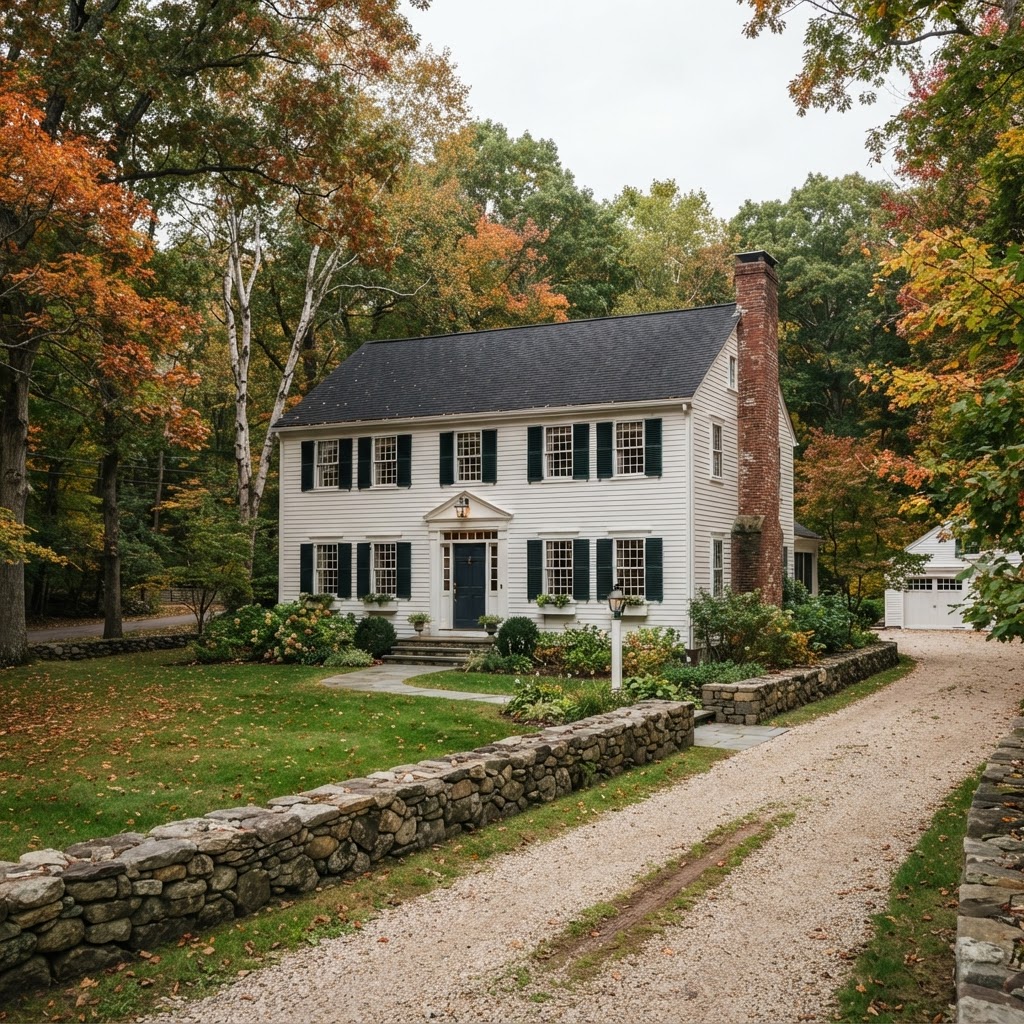
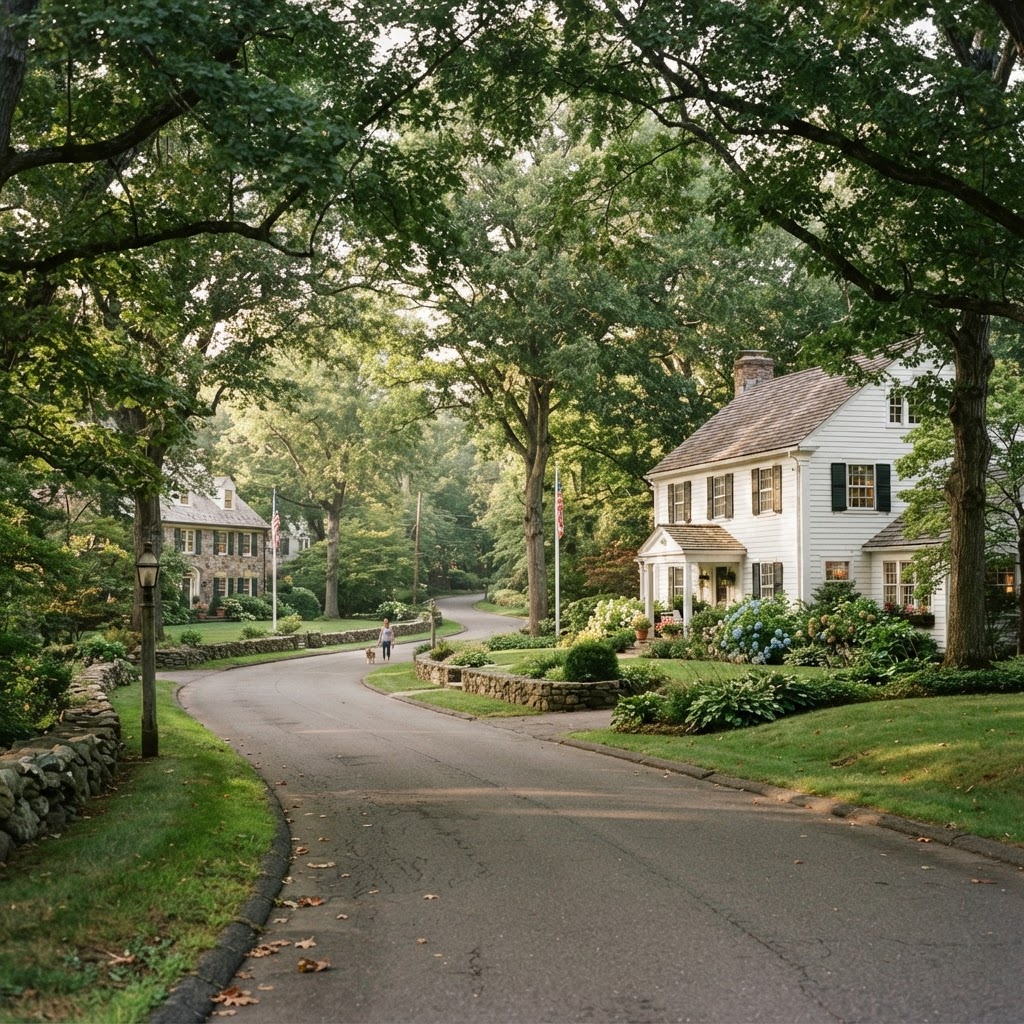
Ridgefield, in pictures.
A few useful next reads.
BUYING
Buying a Home in Connecticut
The complete guide to understanding the buying process in Connecticut.
Read the Guide →HOME VALUE
Connecticut Home Value
Understand what your home is worth and how to think about value.
Read the Guide →RELOCATION
Moving to Connecticut
A guide for anyone considering a move to Connecticut.
Read the Guide →If Ridgefield feels close, keep looking.
Wilton
A little more purely residential and commuter-oriented, with strong connection toward lower Fairfield County and the Route 7 corridor.
Redding
Quieter, more rural, and less town-centered, with a stronger emphasis on land, privacy, and preserved landscape.
New Canaan
More tightly connected to the Metro-North commuter pattern, with a compact, highly polished town center and a denser concentration of luxury housing.
Find Connecticut by the way you want to live.
COUNTRY LIVING
More land, quieter roads, and a closer relationship with the landscape.
CONNECTED TOWNS
Regional access with a recognizable community of their own.
COASTAL CONNECTICUT
Shoreline, water, village centers, and Long Island Sound.
TOWN-CENTERED LIVING
A stronger relationship between home and everyday life around the center.
Seeing the town is different from understanding whether it fits your move.
If Ridgefield is beginning to feel like a possibility, the next useful step is to put the town, the homes available within it, your budget, commute, priorities, and the alternatives around it into the same context.